
As global consumer demand for safe, eco-friendly, and multifunctional home products continues to rise, EVA interlocking floor mats are seizing unprecedented market opportunities, driven by their exceptional performance and versatile applications. According to the latest research data from DataIntelo, the global market for non-toxic EVA play mats reached a valuation of $1.45 billion in 2024 and is projected to grow to $2.60 billion by 2033, boasting a Compound Annual Growth Rate (CAGR) of 6.7%. Notably, a heightened awareness regarding child safety has emerged as the primary engine driving this current wave of growth.
From a global perspective—propelled by accelerating urbanization, the rise of dual-income households, and the booming growth of e-commerce channels—this niche market is continuously expanding its application boundaries. It is rapidly permeating various sectors, ranging from infant and toddler activity centers to home gyms, yoga studios, commercial fitness centers, and even interior design spaces.
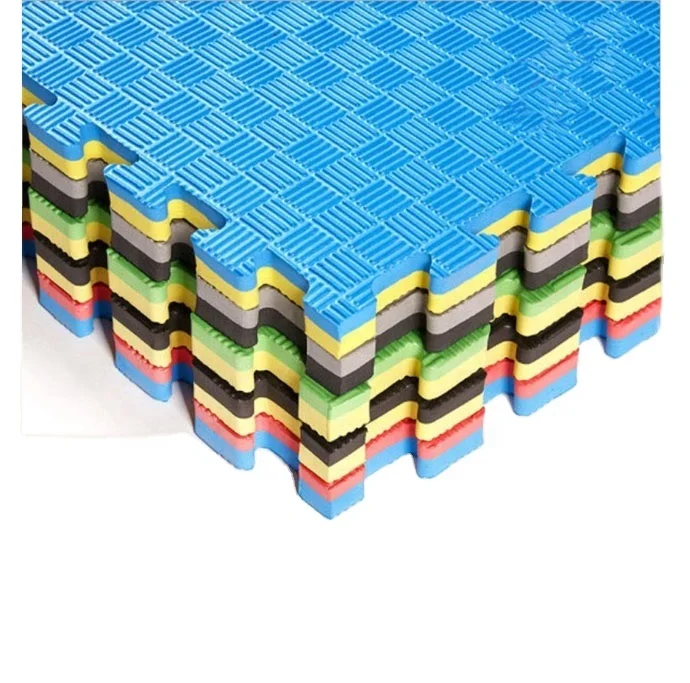
I. Product Characteristics and Material Safety of EVA Interlocking Floor Mats
The core material of EVA interlocking floor mats is Ethylene-Vinyl Acetate (EVA) copolymer. Produced via a closed-cell foaming process, the resulting EVA foam features a closed-cell structure that offers distinct advantages, including low water absorption, high resilience, and minimal odor emission. With a typical density range of 40 to 100 kg/m³, these mats strike an optimal balance between flexibility and durability. The puzzle-style interlocking design allows consumers to assemble and disassemble the mats independently—without the need for tools—while offering the flexibility to adjust the coverage area, making them ideal for irregular spaces or situations requiring future expansion.
In terms of safety, EVA material itself is inherently non-toxic and odorless, containing no harmful plasticizers. However, historical testing by consumer protection agencies in various regions has occasionally revealed instances where certain low-cost EVA mats contained excessive levels of formamide residue. As a potentially carcinogenic chemical, formamide can slowly off-gas in high-temperature and high-humidity environments, thereby posing a potential health risk to infants and toddlers. Consequently, rigorous testing and third-party safety certifications have become critical criteria for consumers when making purchasing decisions. Leading industry suppliers are currently increasing their investment in compliance with international standards—such as REACH, RoHS, EN71, and ASTM—to ensure that their products meet or exceed regulatory requirements regarding heavy metals, phthalates, formamide, and other key safety indicators. II. Home Fitness Scenarios: The Home Fitness Wave Spurs New Demand for Essential Equipment
Against the backdrop of continuously rising global health awareness, portable, affordable, and comfortable floor protection solutions are increasingly becoming standard essentials for home fitness consumers. Thanks to their advantages—including superior cushioning and shock absorption, noise reduction, and anti-slip stability—high-density EVA foam mats are finding their way into more and more home gyms, garages, and multi-purpose activity rooms, fundamentally transforming the limitations associated with traditional home fitness flooring.
Expert analysis indicates that, compared to traditional wood flooring or tiles, EVA interlocking mats demonstrate exceptional performance in terms of impact absorption; they effectively disperse the forces generated during exercise, offering significant benefits in protecting joint health and reducing post-workout recovery times. From cardio training to weightlifting, and from yoga to High-Intensity Interval Training (HIIT), the interlocking structure of these EVA mats creates a seamless and stable workout surface, thereby minimizing the risk of slips and injuries. Furthermore, the non-porous nature of their closed-cell structure prevents the absorption of sweat and inhibits bacterial growth; daily cleaning requires nothing more than a simple wipe-down with a damp cloth to maintain hygiene, which also substantially reduces the maintenance costs associated with exercise equipment. This simple yet efficient maintenance experience undoubtedly serves as a major draw for home fitness enthusiasts who prioritize a “ready-to-use, easy-to-clean” lifestyle.
III. Children’s Play and Early Education Scenarios: The Dual Value of Safety Protection and Early Learning
In spaces dedicated to infants and toddlers, EVA interlocking mats have become an indispensable piece of foundational infrastructure. As living spaces for urban families continue to shrink, safe and stimulating indoor activity zones have become a necessity; the cushioning and anti-slip properties inherent in EVA mats effectively mitigate the risk of injury should infants or toddlers fall from heights or during active play.
Market research reveals that the global market for baby play mats reached a valuation of US$1.263 billion in 2025, with the Chinese market accounting for approximately RMB 2.46 billion. Concurrently, an increasing number of high-end brands are integrating educational elements—such as letters, numbers, and maps—into their EVA mats. Through vibrant graphic designs and an interlocking puzzle format, these products serve a dual purpose: stimulating children’s visual development while simultaneously fostering their cognitive abilities. Major brands are also vying to launch eco-friendly floor mats manufactured from recyclable materials, even integrating sound devices and lighting modules into their products. This strategy further enhances product added value and premium potential, catering to the new generation of parents’ consumer expectations regarding a “safe, smart, and sustainable” triple standard.
IV. Professional Sports Venues and Commercial Applications: The Standardized Choice—From Martial Arts Dojos to Gyms
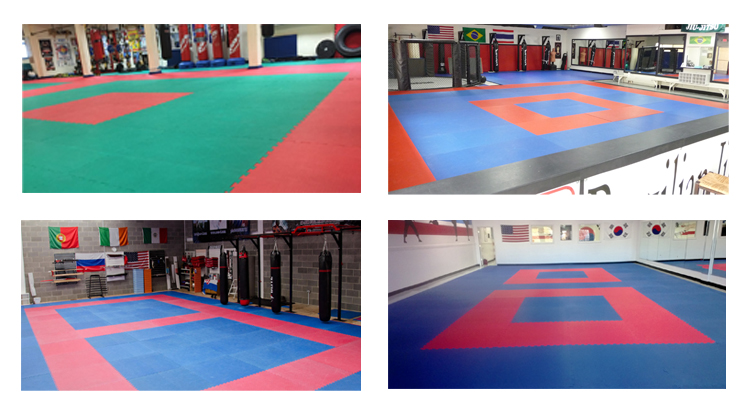
In the realm of professional sports, interlocking EVA floor mats hold a position of significant importance. Settings such as combat sports arenas, Taekwondo dojos, yoga studios, and functional fitness centers impose rigorous demands on flooring materials regarding impact resistance, wear resistance, and environmental performance. EVA foaming industry clusters in regions across China—including Shandong, Jiangsu, and Liaoning—are establishing a complete industrial chain ranging from raw material supply to finished product export. Many enterprises with vertical integration capabilities are now capable of supplying tens of thousands, or even hundreds of thousands, of high-quality floor mats each month.
In large-scale commercial settings—such as fitness gyms, sports rehabilitation centers, and childcare facilities—the modular interlocking feature of EVA mats offers distinct advantages. When a specific section requires replacement due to long-term wear and tear, only the individual modules need to be swapped out, eliminating the need to completely re-floor the entire area; this significantly reduces long-term operational costs. Concurrently, international compliance certifications have become a critical threshold for major corporate buyers. Only suppliers who meet standards such as REACH and ISO can gain access to mainstream procurement channels in European and North American markets. At industry showcases—such as the 138th Canton Fair and other major events scheduled for 2025—EVA mat manufacturers have already demonstrated three key technological trends: smart customization, eco-friendly innovation, and multi-functional integration. With an estimated investment scale reaching $120 million, the industry is clearly demonstrating its unwavering determination to undergo a comprehensive transformation and upgrade.
V. Interior Decoration and Lifestyle Enhancement: Aesthetic Upgrades Drive Innovation in Flexible Flooring Materials
The application scope of interlocking EVA floor mats continues to expand into the realms of home soft furnishings and lifestyle improvement. As consumer expectations regarding home aesthetics and personalization continue to rise, traditional flooring materials often face inherent limitations in terms of patterns, color options, and flexibility of replacement. In contrast, EVA mats have rapidly captured the attention of the younger generation of homeowners, thanks to their rich array of color combinations, customizable textures (such as faux wood grain and stone finishes), and their “DIY-friendly” nature that allows for free-form assembly. From children’s rooms to yoga balconies, and from garage conversion zones to outdoor camping sites, a wealth of shared notes and user experience posts has fueled word-of-mouth popularity for EVA floor mats as a “low-cost, high-aesthetic flooring renovation solution.”
At the 138th Canton Fair in China in 2025, the eco-friendly theme surrounding EVA floor mats reached new heights. With global demand for sustainable, non-PVC alternatives growing at an average annual rate of 5.2%, EVA material—thanks to its recyclability and compliance with increasingly stringent environmental regulations in Europe and North America—is emerging as a compelling alternative to traditional PVC mats. Data indicates that the Asia-Pacific region, driven by its massive manufacturing capacity and rapidly expanding domestic consumption, captured the largest share of the global non-toxic EVA play mat market in 2024. Meanwhile, the North American and European markets—characterized by high per capita purchasing power and a strong emphasis on safety certifications—have established themselves as key growth hubs for high-end products.
VI. Global Supply Chain Landscape and Competitive Dynamics
Currently, the global supply chain for interlocking EVA floor mats is highly concentrated within China’s manufacturing heartland. Regions such as Liaoning, Jiangsu, and Shandong host a dense cluster of vertically integrated manufacturers equipped with advanced mold design and custom production capabilities, boasting monthly production capacities ranging from 50,000 to over 300,000 mats. In the B2B trade sector, on-time delivery rates (≥90%) and customer repurchase rates (>20%) serve as the primary metrics for assessing a supplier’s overall strength. Certain export-oriented enterprises—exemplified by those based in Linyi, Shandong—have earned a sterling reputation in the international market by achieving on-time delivery rates as high as 96% and responding to customer inquiries with remarkable efficiency, typically within an average of three hours.
In terms of top-tier industry competition, the global market for interlocking sports mats features a lineup of renowned brands such as BalanceFrom, ProsourceFit, Greatmats, Zeny, and AmazonBasics, all of whom are engaged in fierce competition regarding e-commerce channel strategies and brand differentiation. Concurrently, China’s domestic market for EVA toys and floor mats remains highly buoyant, maintaining an average annual growth rate exceeding 20%. Furthermore, product categories within this sector are undergoing continuous segmentation, expanding beyond traditional baby crawling mats to encompass diverse segments such as educational pattern mats, specialized fitness mats, and customized flooring solutions.
Overall, interlocking EVA floor mats are steadily penetrating a wide array of sectors—including home environments, sports and fitness, early childhood education, and commercial facilities—driven by their comprehensive advantages in terms of lightweight design, eco-friendliness, cost-effectiveness, and safety. Amidst the trends of consumption upgrading and continuously rising safety standards, the global EVA interlocking floor mat industry is entering a critical window of opportunity characterized by the simultaneous advancement of technological innovation and market expansion. Future competition will center on product environmental standards, capabilities for personalized customization, and the deep-seated cultivation of brand trust. Whether driven by a desire to safeguard family health or a pursuit of enhanced athletic experiences, EVA interlocking floor mats have undoubtedly established themselves as a solid foundation for a high-quality lifestyle.
For access to in-depth industry reports, procurement agency services, and strategic consulting, we invite you to follow the [Shangcai Zixun] platform. We are committed to keeping you updated with the latest global trends and investment insights within the flooring materials sector.
Post time: Apr-24-2026